As global transportation transitions rapidly toward full electrification, the requirement for robust, secure, and user-authenticated Electric Vehicle Supply Equipment (EVSE) has evolved from a basic power delivery mechanism into a critical component of smart energy grids and decentralized billing systems. Radio-Frequency Identification (RFID) technology stands as the primary authentication protocol bridging physical user authorization with digital charge point networks.
As a premier China RFID charging point exporter, enterprise procurers look beyond surface-level assembly to evaluate hardware resiliency, embedded encryption algorithms, local network compliance, and supply chain scalability. This technical dossier outlines the engineering principles, manufacturing methodologies, and international compliance frameworks executed by Zhejiang Midwest Charger Co., Ltd. to empower commercial operators, charge point operators (CPOs), and OEM partners worldwide.
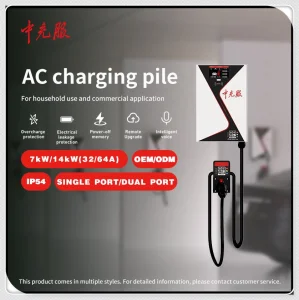
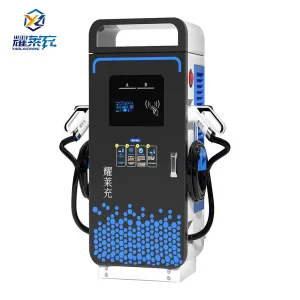
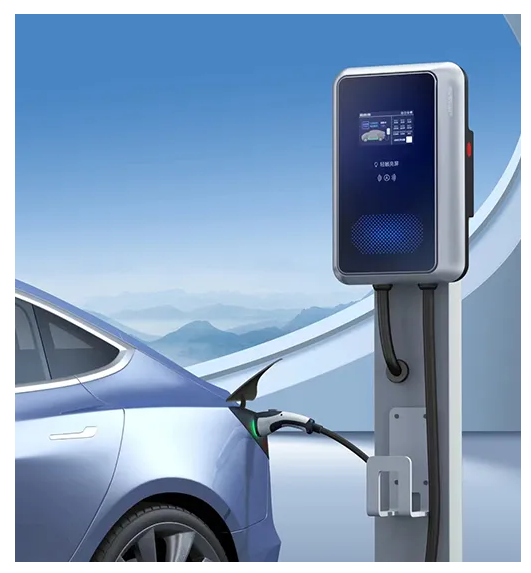
Zhejiang Midwest Charger Co., Ltd. is a leading high-tech enterprise based in China, specializing in the research, development, production, and sales of electric vehicle (EV) charging equipment. Our diverse product portfolio includes home AC charging stations, portable AC chargers, and high-performance DC fast charging stations suitable for residential, commercial, and public applications.
Our corporate vision is to make EV charging safer, smarter, and more accessible. We strive to be a first-class enterprise and build an internationally recognized brand. By continuously advancing technology and adhering to strict quality standards, we aim to lead the EV charging industry toward a more sustainable and electrified future.
Through our dedicated efforts, Zhejiang Midwest Charger Co., Ltd. has successfully exported products to over 20 countries, including the United States, the United Kingdom, Germany, France, and more. Our products comply with CE, CQC, and other international and domestic quality certifications, and we hold multiple invention patents for our proprietary technologies.
Our company operates an 8,000-square-meter modern factory with around 200 skilled employees. With over 12 years of manufacturing experience, we support both ODM and OEM services, enabling customized solutions for diverse market needs. Our R&D team focuses on innovative design, energy efficiency, and intelligent charging management to ensure each product meets the highest standards of performance and safety.
Quality and safety are the cornerstones of our product philosophy. Each product undergoes rigorous testing and verification before entering the market. We carefully select suppliers for every component and perform regular inspections on all marketed products. Our commitment extends to comprehensive after-sales service, where our professional team follows up on all customer concerns until fully resolved.
At Zhejiang Midwest Charger Co., Ltd., we believe in collaboration and continuous improvement. We sincerely invite like-minded partners from around the world to join us in advancing EV charging technology, capturing the golden era of electric mobility, and building a greener, smarter future together.
An RFID charging point acts as a localized access gateway within a distributed energy ecosystem. The internal architectural design must ensure zero latency in authentication, high physical durability against environmental extremes, and multi-protocol compliance.
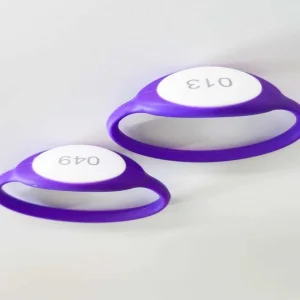
Commercial EVSE deployments globally rely on specific radio-frequency standards. Our hardware architecture supports dual-frequency and high-frequency (HF) proximity platforms, specifically:
| RFID Protocol / Chip Type | Operating Frequency | Encryption Algorithm | Primary Application Scenario | Security Level |
|---|---|---|---|---|
| ISO/IEC 14443A (MIFARE Classic) | 13.56 MHz | Crypto1 / 48-bit Key | Residential Wallbox / Enterprise Access | Standard |
| ISO/IEC 14443A (MIFARE DESFire EV3) | 13.56 MHz | AES-128 / 3DES Encryption | Public Commercial Fleet / Dynamic Billing Hubs | Military / High Security |
| ISO/IEC 15693 (Vicinity Cards) | 13.56 MHz | Custom Key / Unique UID Read | Long-range Industrial Access Control | Medium |
| EM4100 / TK4100 Legacy | 125 kHz | None (Read-Only UID) | Basic Fleet Keyfob Start/Stop | Basic |
A common vulnerability in low-cost RFID charging points is network disconnection causing failure of session authorization. Zhejiang Midwest Charger Co., Ltd.’s proprietary control mainboard incorporates an embedded EEPROM local cache capable of storing up to 10,000 UID whitelist keys. Even when cellular (4G/LTE) or Ethernet connectivity to the central OCPP backend drops, local card verification occurs within <100ms, ensuring uninterrupted utility for registered fleet drivers.
Hardware reliability must be paired with open-protocol communications. As a top China RFID charging point exporter, our product stack adheres strictly to international software protocols, preventing vendor lock-in and allowing seamless integration into global Charge Point Management Systems (CPMS).
Our RFID EV chargers translate RFID card scans directly into standard Authorize.req and StartTransaction.req WebSocket packets sent to remote cloud platforms like ChargeLab, AMPECO, Greenflux, or custom tenant platforms.
Integrated Modbus RTU / RS485 communication interfaces link directly with grid smart meters. When multiple RFID stations operate simultaneously, the system dynamically allocates available amperage to prevent circuit overload.
Preparing infrastructure for the future, our control boards support hybrid authentication: enabling traditional RFID card swipe while simultaneously bridging toward Plug & Charge (ISO 15118) automatic TLS contract certificates.
Global procurement directors face rising raw material costs, supply chain bottlenecks, and stringent quality demands. Leveraging Zhejiang’s advanced manufacturing ecosystem, Zhejiang Midwest Charger Co., Ltd. delivers exceptional Bill-of-Materials (BOM) cost efficiency without sacrificing premium component selection.
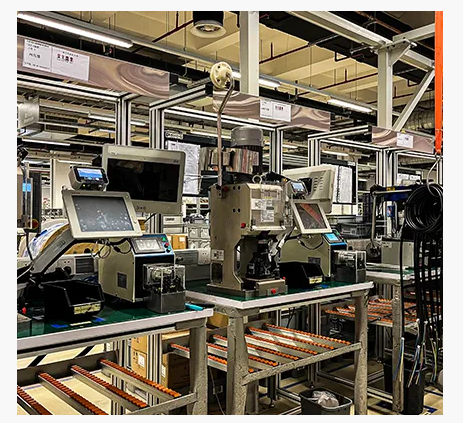
Fully automated surface-mount technology (SMT) lines ensuring precise mounting of RFID microcontrollers, relay drivers, and power metering components.
Tier-1 automotive-grade relays (Panasonic/Omron), high-accuracy current transformers, and flame-retardant polycarbonate (UL94-V0) housing.
100% full-load aging tests, dielectric voltage withstand checks, surge immunity tests, and automated RFID card sweep tests before packaging.
Tailored silk-screen branding, customized RFID card printing, custom firmware configurations, and modular cabinet engineering within 14 working days.
Exporting to over 20 countries requires rigorous adherence to regional safety mandates, grid protection laws, and electromagnetic compatibility (EMC) regulations.
Compliant with LVD (2014/35/EU), EMC (2014/30/EU), and Radio Equipment Directive (RED 2014/53/EU) for RFID emissions. Optional MID-certified kWh meters ensure legal public billing across Germany (Eichrecht ready), UK, and Nordics.
Designed to meet UL 2594, UL 2231-1/2 electrical safety standards and FCC Part 15 Class B specifications for low-power RFID transmitters. Features Type 3R/4 weatherized enclosures.
Housed in robust IP65/IP66 weatherproof enclosures with IK10 impact resistance ratings, ensuring seamless operational integrity from cold Nordic regions (-30°C) to arid Middle Eastern environments (+55°C).
RFID authorization provides essential local access control across diverse operational environments.
Allows tenants in apartment complexes to activate charging using personalized RFID tags, attributing energy consumption directly to individual billing accounts.
Restricts charging access exclusively to authorized fleet vehicles and logistics personnel. Tracks driver metrics and automated shift energy usage.
Offers complimentary or tiered charging benefits for employees via company ID cards (ISO14443A standard), while preventing unauthorized public usage.
Acts as a secondary payment mode for non-smartphone users or areas with poor cellular coverage, swiping RFID cards pre-loaded with charging credits.
 Midwest Charger