High-precision EV charging hardware, intelligent power electronics, and industrial component solutions engineered for global commercial deployment.
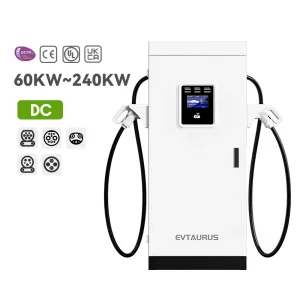
Navigating technical architecture, CE certification standards (EN 61851 / IEC 62196), industrial OEM production pipelines, and grid balancing integration.
The global transition to electromobility has transformed Electric Vehicle Supply Equipment (EVSE) from a commercial amenity into mission-critical municipal, corporate, and residential energy infrastructure. Among all EVSE topologies, Level 2 AC Charging Stations (operating between 3.7 kW and 22 kW) form the back-bone of stationary charging worldwide. Deploying Level 2 charging equipment demands sophisticated manufacturing capabilities, bulletproof power electronics design, and strict regulatory adherence.
For international procurement directors, fleet managers, charge point operators (CPOs), and electrical distributors, sourcing from validated CE certified Level 2 charging station factories is the foundational step to mitigate operational liability, lower Total Cost of Ownership (TCO), and guarantee interoperability across diverse electric vehicle architectures.
Information Gain Key Metric: Deploying certified Level 2 chargers with hardware-level Dynamic Load Balancing (DLB) reduces site grid upgrade CAPEX by up to 62% while maximizing daily vehicle energy throughput.
When evaluating Level 2 EV charging station manufacturers in China and globally, tier-1 procurement strategies emphasize four essential vectors:
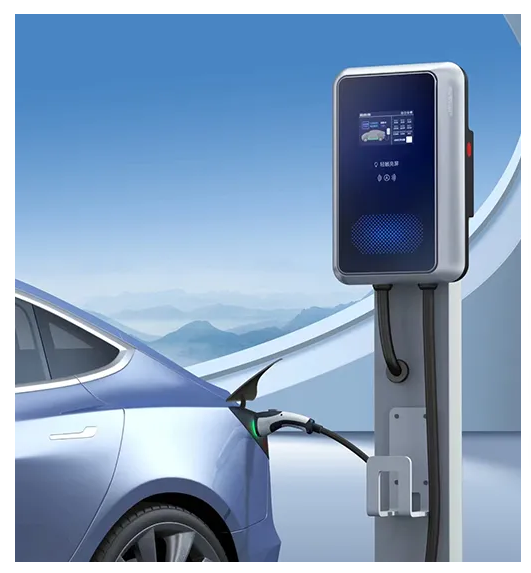
Zhejiang Midwest Charger Co., Ltd. is a leading high-tech enterprise based in China, specializing in the research, development, production, and sales of electric vehicle (EV) charging equipment. Our diverse product portfolio includes home AC charging stations, portable AC chargers, and high-performance DC fast charging stations suitable for residential, commercial, and public applications.
With a strong commitment to innovation and excellence, we aim to provide safe, reliable, and efficient EV charging solutions to meet the evolving needs of global customers.
Our corporate vision is to make EV charging safer, smarter, and more accessible. We strive to be a first-class enterprise and build an internationally recognized brand. By continuously advancing technology and adhering to strict quality standards, we aim to lead the EV charging industry toward a more sustainable and electrified future.
Through our dedicated efforts, Zhejiang Midwest Charger Co., Ltd. has successfully exported products to over 20 countries, including the United States, the United Kingdom, Germany, France, and more. Our products comply with CE, CQC, and other international and domestic quality certifications, and we hold multiple invention patents for our proprietary technologies.
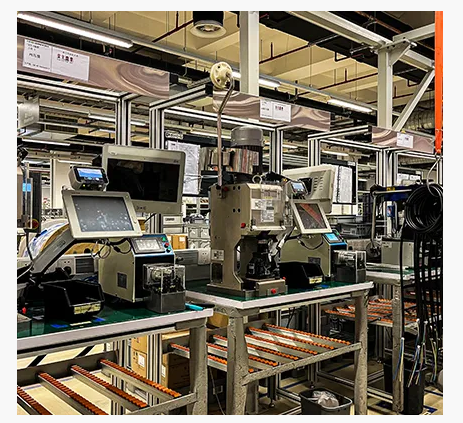
Our company operates an 8,000-square-meter modern factory with around 200 skilled employees. With over 12 years of manufacturing experience, we support both ODM and OEM services, enabling customized solutions for diverse market needs. Our R&D team focuses on innovative design, energy efficiency, and intelligent charging management to ensure each product meets the highest standards of performance and safety.
Quality and safety are the cornerstones of our product philosophy. Each product undergoes rigorous testing and verification before entering the market. We carefully select suppliers for every component and perform regular inspections on all marketed products. Our commitment extends to comprehensive after-sales service, where our professional team follows up on all customer concerns until fully resolved.
Understanding the electrical topology, safety interlocks, and European compliance mandates governing Tier-1 Level 2 charging station production.
Exporting Level 2 AC EVSE into the European Economic Area (EEA) and global markets accepting CE marks requires strict compliance with three mandatory European Union Directives:
Top-tier Level 2 Charging Station Factories build multiple redundant safety mechanisms into the main PCBA and power switching unit. Key safety topologies engineered at Zhejiang Midwest Charger Co., Ltd. include:
| Specification Parameter | Single-Phase Level 2 (7kW / 32A) | Three-Phase Level 2 (11kW / 16A) | Three-Phase Level 2 (22kW / 32A) |
|---|---|---|---|
| Nominal Input Voltage | 230V AC ± 15% (1P+N+PE) | 400V AC ± 15% (3P+N+PE) | 400V AC ± 15% (3P+N+PE) |
| Rated Current Output | 32 Ampere Max | 16 Ampere per phase | 32 Ampere per phase |
| Charging Connector Standard | IEC 62196-2 Type 2 / SAE J1772 Type 1 | IEC 62196-2 Type 2 Socket/Cable | IEC 62196-2 Type 2 Socket/Cable |
| Grid Frequency | 50 Hz / 60 Hz | 50 Hz / 60 Hz | 50 Hz / 60 Hz |
| OCPP Network Protocol | OCPP 1.6J / OCPP 2.0.1 JSON | OCPP 1.6J / OCPP 2.0.1 JSON | OCPP 1.6J / OCPP 2.0.1 JSON |
| Residual Leakage Protection | AC 30mA + DC 6mA (IEC 62955) | AC 30mA + DC 6mA (IEC 62955) | AC 30mA + DC 6mA (IEC 62955) |
| Enclosure Protection Class | IP54 / IP65 | IK10 Impact Rated | IP54 / IP65 | IK10 Impact Rated | IP54 / IP65 | IK10 Impact Rated |
Scalable infrastructure deployment strategies engineered for real estate developers, fleet management, and public energy networks.
Deploying charging infrastructure in Multi-Unit Dwellings (MUDs) requires individual sub-metering, MID-certified revenue grade energy meters, and automated billing integration. Our Level 2 chargers support RFID user authentication and dynamic power allocation across subterranean parking arrays without tripping main building breakers.
Commercial delivery fleets (last-mile delivery vans, corporate car pools) utilize overnight 11kW or 22kW AC Level 2 charging to maintain battery health while taking advantage of off-peak utility tariffs. Integrated Modbus TCP/RTU interfaces allow seamless integration with building management systems (BMS).
By linking Level 2 chargers directly with battery energy storage systems (BESS) and photovoltaic (PV) arrays, charge point operators can implement "Solar-to-EV" modes. This zero-carbon charging system optimizes self-consumption of renewable power and eliminates peak demand charges from distribution utilities.
How Zhejiang Midwest Charger Co., Ltd. empowers global brands with white-label hardware engineering, custom enclosures, and next-gen firmware protocol support.
Building a strong enterprise brand identity requires bespoke hardware aesthetics combined with rugged physical durability. Our 8,000 m² factory supports extensive OEM/ODM customization options:
The EV ecosystem is rapidly evolving toward bi-directional power flow and zero-touch authorization. Our R&D engineering pipeline includes:
Eliminates the need for RFID cards or mobile apps. Automated cryptographic handshake between vehicle PKI certificates and charger enables instant charging session initiation upon cable insertion.
Hardware architecture development supporting bi-directional AC charging, allowing electric vehicles to serve as distributed energy resources (DER) feeding power back to home grids or local distribution networks during peak stress.
Rigorous multi-stage quality assurance ensuring zero-defect manufacturing for global markets.
At Zhejiang Midwest Charger Co., Ltd., quality and safety are the cornerstones of our product philosophy. Each product undergoes rigorous testing and verification before entering the market. We carefully select suppliers for every component and perform regular inspections on all marketed products.
Our commitment extends to comprehensive after-sales service, where our professional team follows up on all customer concerns until fully resolved.
We believe in collaboration and continuous improvement. We sincerely invite like-minded partners from around the world to join us in advancing EV charging technology, capturing the golden era of electric mobility, and building a greener, smarter future together.
Factory Testing Protocols: Every single Level 2 charger leaving our assembly line undergoes automated Hipot testing, insulation resistance testing, full load burn-in thermal aging for 4+ hours, and complete simulated EV communications functional verification.
Expert responses to essential procurement, certification, and engineering questions for international buyers.
For European Union distribution, EV charging stations MUST hold a valid CE declaration of conformity covering the Low Voltage Directive (LVD EN 61851-1), Electromagnetic Compatibility (EMC EN 61000 series), and Radio Equipment Directive (RED) for wireless units. Additional regional standards such as UKCA (United Kingdom), RoHS compliance, REACH compliance, and MID metering compliance for public billing are highly recommended.
Single-phase 7kW chargers operate on standard 230V single-phase grid power at 32 Amps, providing roughly 35-45 km of range per hour of charging. Three-phase 22kW chargers utilize 400V three-phase grid power at 32 Amps per phase, offering up to 120 km of range per hour. Single-phase is ideal for residential installations, whereas 11kW and 22kW three-phase units are preferred for commercial depots and public parking facilities.
Dynamic Load Balancing constantly monitors real-time total electrical demand of a building or facility via CT (Current Transformer) clamps or smart energy meters. When household/building appliances consume high power, the DLB controller automatically signals the EV charger to reduce charging amperage. As overall demand drops, charging power scales back up to maximum capacity, preventing main circuit breaker trips without requiring costly electrical service upgrades.
Yes. We provide end-to-end OEM software integration. This includes configuring custom OCPP 1.6J or 2.0.1 cloud endpoints, white-labeled mobile iOS/Android applications, customized UI artwork on touchscreen HMIs, and personalized firmware OTA (Over-The-Air) update server routing.
Our Level 2 charging stations are designed to meet IP54 or IP65 water/dust ingress standards and IK10 impact resistance ratings. Features include UV-stabilized anti-aging outer casings, conformal-coated internal PCBAs, anti-condensation internal heating circuits, and operating ambient temperature ranges certified from -30°C to +55°C.
Explore our full line of commercial charging stations, energy storage solutions, and precision hardware components.
 Midwest Charger