What Happens If You Leave an EV Charger Plugged In?

Time:2026-10-17 Author:Mason
0%

When drivers ask “what happens if you leave an ev charger plugged in,” they often mean two different things. They may mean leaving the cable connected to the car, or leaving the charger connected to the wall. In most modern systems, charging stops automatically when the battery reaches its selected limit. The vehicle and charger then communicate through built-in control circuits. Power use usually drops to a low standby level. It does not normally keep forcing electricity into a full battery.

That reassurance has limits. A charger can remain warm, especially after several hours of high-power charging. A damaged cable, loose outlet, or poorly installed circuit deserves immediate attention. Look for melted plastic, unusual smells, buzzing, or repeated charging interruptions. Small warning signs matter. Keep the connector dry, protect it from vehicle tires, and follow the carmaker’s charging guidance. Home charging equipment should match the electrical capacity of the property. A qualified electrician can verify that safely.

The practical answer depends on the charger, vehicle, battery settings, and installation quality. Some manufacturers recommend unplugging after charging, while others design their equipment for continuous connection. Check the owner’s manual rather than relying on online assumptions. It is easy to overstate battery damage here. Leaving a compatible charger connected will not automatically ruin the battery, but frequent charging to 100 percent may affect long-term battery health on some models. The details matter. A careful habit is simple: set an appropriate charge limit, inspect the equipment occasionally, and disconnect it when the manual advises.
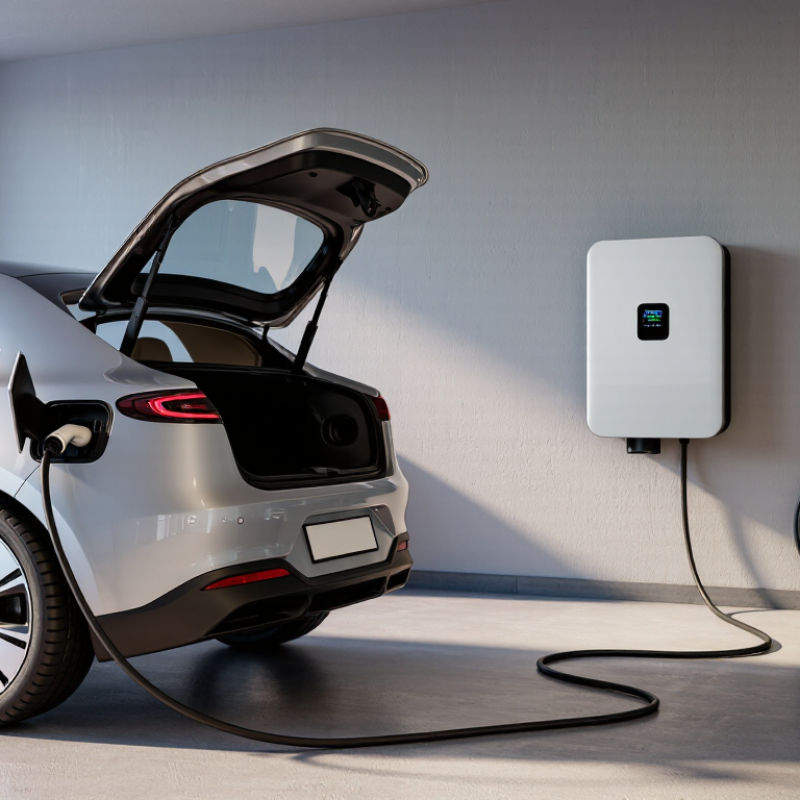
What Happens If You Leave an EV Charger Plugged In?

What Happens When an EV Charger Stays Plugged In

What happens when an EV charger stays plugged in? Usually, very little. After the battery reaches its target level, the vehicle’s battery management system reduces or stops charging current. The charging equipment may remain connected, but it does not normally deliver full power continuously. IEC 61851 describes this communication between the vehicle and charging equipment. Not zero.

The U.S. Department of Energy’s Alternative Fuels Data Center lists typical Level 2 charging power from about 3 to 19.2 kilowatts. A 7.2-kilowatt session may fill a 60-kilowatt-hour battery overnight. Afterward, electricity use usually falls to standby demand. That demand is small, yet it varies by equipment, temperature, network functions, and settings. The IEA’s Global EV Outlook 2024 reported more than four million public charging points worldwide by the end of 2023. More connected equipment means more idle systems to manage.

In practical use, leaving the cable connected overnight is generally acceptable when the equipment is certified and undamaged. Still, I would not call it completely risk-free. Inspect the plug for heat, discoloration, cracks, or moisture. Keep the connector off wet ground. A damaged cable can create a bigger concern than a full battery. The National Electrical Code also emphasizes suitable circuits, grounding, and protection for charging equipment. Unplugging after every session may reduce exposure, but it can also become an unnecessary habit. Check it anyway.

What Happens When an EV Charger Stays Plugged In?

Estimated annual electricity use from standby power when the vehicle is fully charged but the charger remains connected

Once charging is complete, a properly operating EV charger normally stops delivering high charging power and only uses a small standby load for monitoring and communication. The estimates assume continuous connection for 8,760 hours per year and an electricity price of $0.16 per kWh.

How the Charging System Detects a Fully Charged Battery

What Happens If You Leave an EV Charger Plugged In?

How the Charging System Detects a Fully Charged Battery

An EV does not keep receiving maximum power after reaching full charge. The battery management system monitors cell voltage, current, temperature, and estimated state of charge. It then tells the onboard charger to reduce current or stop charging. With DC charging, the vehicle and charging station exchange this information continuously through a communication protocol. The charger is not making an independent guess.

The change is visible at the cable. Charging may slow sharply near the final percentage, much like water entering a nearly full glass. The International Energy Agency reported in Global EV Outlook 2024 that electric car sales exceeded 17 million worldwide in 2023. That scale makes reliable battery-control software essential, not optional. Yet state-of-charge estimates remain imperfect. Temperature, cell balance, and sensor accuracy can slightly alter the displayed percentage.

After charging stops, the vehicle may draw small amounts of energy for cooling, cabin conditioning, battery heating, or monitoring. Some systems also perform brief top-off cycles. This is usually normal. The U.S. Department of Energy’s Alternative Fuels Data Center describes charging equipment as communicating with the vehicle before delivering power, supporting these controlled limits. Still, staying at 100 percent for many hours may increase battery stress, especially in heat. Unplugging is sensible when convenient, but leaving the connector attached is generally not the same as overcharging. The details vary. Industry guidance is useful, though real-world battery behavior can be messier.

What Happens If You Leave an EV Charger Plugged In? — How the Charging System Detects a Fully Charged Battery

Electric vehicles use battery-management data and charger communication to regulate current as the battery approaches its upper charge limit. The exact behavior varies by vehicle, battery temperature, charging mode, and the selected charge target.

Charging System Signal What the System Monitors How Full Charge Is Detected Typical System Response Energy Behavior Afterward
Estimated state of charge The battery-management system estimates the remaining usable energy using current flow, voltage, temperature, and charging history. The calculated state of charge reaches the vehicle’s selected upper limit, such as a daily-use target or the maximum permitted level. Charging power is reduced and then stopped or paused according to the vehicle’s control settings. The battery does not continue receiving normal full charging power indefinitely.
Cell voltage and voltage balance Individual battery-cell voltages are monitored to identify cells approaching their safe upper voltage range. High cell voltage or an imbalance between cells indicates that the battery is close to its charge limit. The battery-management system can request lower current, stop charging, or perform limited cell balancing. Energy use is generally minimal once the main charging session has ended.
Charging current The system measures current entering the battery and compares it with requested and permitted values. As the battery fills, the permitted current commonly falls during the final phase of charging. The charger transitions from higher-current charging to a lower-current finishing phase before stopping. Charging speed becomes progressively slower near the upper charge limit.
Battery temperature Temperature sensors monitor battery modules and other high-voltage components. Temperature outside the preferred charging range can limit charging even when the battery is not full. The system may reduce power, run thermal management, delay charging, or temporarily suspend the session. Some electricity may be used by pumps, fans, heaters, or cooling equipment.
Vehicle-to-charger communication The vehicle communicates its permitted charging current and charging status to the external charging equipment. The vehicle signals that it is limiting current or no longer requesting energy. The external equipment reduces or stops the power supply while remaining connected and ready. Standby consumption can remain, but it is normally far lower than active charging power.
AC charging after the target is reached The onboard charger follows the battery-management system’s current and voltage limits. The selected charge target is reached and the vehicle no longer requests sustained charging current. Charging usually stops or pauses; the cable may remain physically locked until the vehicle is unlocked. The vehicle may draw small amounts of energy for monitoring, electronics, or temperature control.
DC fast charging near full The vehicle continuously communicates the maximum safe current and voltage to the fast charger. Battery voltage, temperature, cell balance, and state of charge approach their upper operating limits. Power commonly tapers substantially before the selected limit and then stops when the session ends. Remaining charging time can increase significantly near a high state of charge.
Scheduled or delayed charging The vehicle checks time settings, departure settings, charge targets, and sometimes electricity-rate preferences. The battery may already be full, or the scheduled charging window may have ended. The vehicle waits, pauses, or resumes charging only when the programmed conditions are met. Leaving the connector plugged in does not necessarily mean that energy is continuously flowing.
Battery maintenance while connected The vehicle may monitor battery temperature, cell balance, low-voltage systems, and cabin-preconditioning requirements. The system identifies a need for a small corrective action rather than a complete charging session. Short, controlled energy requests may occur depending on the vehicle’s design and settings. Small maintenance loads may occur intermittently instead of continuous full-power charging.
Connector and safety monitoring The system checks proximity, pilot signals, insulation conditions, temperature, and fault status. An unsafe condition, communication fault, overheated connector, or abnormal electrical reading is detected. Charging is reduced or interrupted, and the system may display a warning or require a reset. Power remains off until the fault is cleared and safe charging conditions are restored.

Practical takeaway: Leaving an EV connected after it reaches its charge target normally does not force the battery to keep charging at full power. The battery-management system limits or stops current, while the vehicle and charging equipment may remain in a low-power monitoring state. For long-term parking, following the vehicle’s recommended charge limit and storage guidance is preferable to keeping the battery at a very high state of charge continuously.

Whether an EV Continues to Consume Electricity After Charging

What Happens If You Leave an EV Charger Plugged In?

Whether an EV continues to consume electricity after charging depends on the vehicle and charger. Once the battery reaches its target level, charging normally stops or drops to a very low rate.

Usually, very little.

The charger may remain powered, but that does not mean the battery keeps filling continuously.

Small amounts of electricity can still appear on a meter. The vehicle may monitor battery temperature, protect the high-voltage system, or maintain its smaller 12-volt battery. In very cold or hot weather, thermal management can use more energy. Connected features may also wake the vehicle occasionally. These brief electrical pulses are different from active charging.

Leaving the cable connected is generally safe when the equipment is correctly installed and used according to the vehicle’s instructions. However, charging losses still exist, especially during long idle periods. A home energy monitor can reveal the real pattern more clearly than assumptions.

I once thought a full battery meant zero electricity use, but that was too simple.

The actual draw varies with software, temperature, battery condition, and charging settings. Avoiding unnecessary daily charging may reduce small losses, though convenience and battery care can matter more in practice.

Inspect the plug and cable for heat, damage, or moisture before leaving them connected overnight.

How Plugged-In Charging Affects Battery Health and Safety

Leaving an electric vehicle plugged in overnight is usually safe. Its battery management system stops active charging when the target level is reached. The cable may remain connected while the vehicle draws only small amounts of standby energy. In a quiet garage, the indicator can stay lit without continuous battery filling.

Battery health depends more on temperature, charge level, and charging frequency. A 2020 fleet analysis of over 6,000 electric vehicles reported average capacity loss near 2.3% annually. The same analysis linked faster degradation with high heat, frequent rapid charging, and long periods at high charge levels. The U.S. Department of Energy also advises avoiding prolonged exposure to extreme temperatures when possible. A full battery is not automatically a damaged battery. Still, leaving it full every day may add unnecessary stress.

Keep the vehicle within its recommended charging range. Many drivers can use a lower daily limit and reserve full charging for longer trips. That small adjustment may help. Charging in a shaded, ventilated area also reduces thermal strain. Check the connector before use. It should be dry, clean, and free from cracked insulation.

Never ignore warmth, burning smells, unusual noises, or repeated charging interruptions. National laboratory safety guidance emphasizes using properly rated charging equipment and avoiding improvised connections. I would not treat a plugged-in car as completely risk-free. A healthy system lowers risk, but damaged hardware can still turn a routine overnight charge into a serious problem.

Best Practices for Leaving an EV Connected to a Charger

Leaving an electric vehicle connected after charging is usually safe when the equipment is installed correctly. Modern vehicles stop drawing full power when the battery reaches its selected limit. They may still use small amounts of electricity for battery temperature control or cabin preparation. That does not mean every setup is risk-free. A damaged cable, loose socket, or poorly ventilated outlet can create heat. Check the charger, plug, and wall connection after the first few uses.

I once focused only on charging speed and overlooked a warm plug. It deserved attention sooner.

For daily driving, a moderate charge limit can reduce unnecessary time at a very high state of charge. Follow the vehicle maker’s guidance, especially before long trips.

Scheduling charging for later hours may reduce waiting time and prevent the battery from staying full overnight. Still, convenience matters. If you need the range early, charging to a higher limit is reasonable. Do not disconnect the cable by pulling the cord. Press the release control, then remove the connector carefully. Keep the port cap and cable contacts clean and dry.

Tips:

  • Use a dedicated, correctly rated circuit whenever possible.
  • Inspect for cuts, discoloration, cracked plastic, or unusual heat.
  • Avoid extension cords unless the equipment instructions specifically allow them.
  • Keep the connector away from standing water and heavy traffic.
  • For outdoor charging, use weather-rated hardware and secure the cable.
  • If charging stops unexpectedly, check the manual or contact a qualified electrician.

A simple routine beats guessing. I still think unplugging after every session sounds tidy, but it is not always necessary.

FAQS

What happens after an EV reaches its charging target?

The battery management system usually stops or sharply reduces charging current. Full power does not continue.

Does a plugged-in EV still use electricity?

Yes, but usually very little. The vehicle may monitor temperature, protect its systems, or maintain the smaller battery.

Can overnight charging damage the battery?

Usually not, when the vehicle and equipment work correctly. However, staying fully charged every day may add unnecessary stress.

What conditions can increase battery wear?

High heat, extreme cold, frequent rapid charging, and long periods at high charge levels can increase degradation.

Is leaving the charging cable connected overnight safe?

Generally, yes. Use correctly installed equipment, follow vehicle instructions, and keep the connector dry.

What should drivers inspect before leaving the vehicle plugged in?

Look for heat, discoloration, cracks, moisture, burning smells, or unusual noises. Do not ignore repeated interruptions.

Should the battery always charge to 100 percent?

Not necessarily. A lower daily limit may reduce stress, while full charging can remain useful before longer trips.

Can cold or hot weather increase electricity use after charging?

Yes. Thermal management may briefly use more energy in extreme temperatures. The exact amount varies.

Does unplugging after every session improve safety?

It may reduce exposure, but it is not always necessary. Damaged hardware matters more than simple overnight connection.

How can drivers measure electricity used after charging ends?

A home energy monitor can show standby demand more clearly. Assumptions can be wrong. Check the actual pattern.

Conclusion

What happens if you leave an EV charger plugged in? In most cases, the vehicle and charger communicate continuously to manage the charging process. Once the battery reaches its target level, the system automatically reduces or stops the flow of electricity, so the car does not keep charging at full power. It may occasionally draw a small amount of energy to maintain the battery, operate monitoring systems, or support temperature management, but this consumption is generally limited.

Leaving an EV connected is usually safe when the charging equipment and vehicle are used correctly. However, keeping the battery at a very high charge level for long periods may gradually affect battery health, especially in hot or cold conditions. For better long-term performance, follow the vehicle’s recommended charging limit, use scheduled charging when available, keep connectors clean and dry, and inspect cables regularly. Disconnect the charger when it is no longer needed, particularly before extended storage or during severe weather.

Mason

Mason

Mason is a seasoned marketing professional with a deep expertise in the company's offerings and a passion for driving brand awareness. With a strong background in digital marketing strategies, he has an innate ability to connect with diverse audiences and effectively communicate product benefits.......