When exploring electric vehicle charging options, many drivers ask, "what is the difference between level 1 and level 2 charger?" Understanding this distinction can greatly impact your charging experience. Level 1 chargers use a standard 120-volt outlet, making them accessible for most households. They are often slower, taking up to 12-20 hours to fully charge an EV. On the other hand, level 2 chargers operate at 240 volts. This allows for a much quicker charge time, often completing a full charge in 4-8 hours.
The choice between these chargers depends on your daily driving habits. Level 1 may suffice for those with shorter commutes. However, if you often travel longer distances, a level 2 charger is worth considering. Various factors come into play, such as installation costs, space availability, and personal preferences. Each option has its pros and cons, leading to potential reflections on your charging needs.
Ultimately, understanding how level 1 and level 2 chargers differ can empower you to make informed decisions. Take time to evaluate what suits your lifestyle. This knowledge will help you navigate the world of EV charging more confidently.
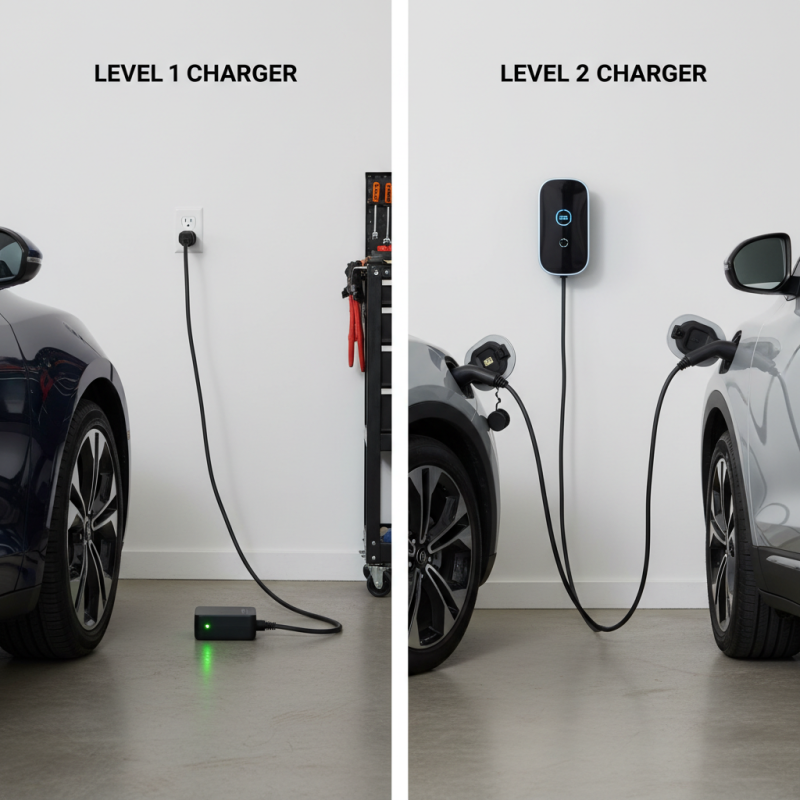
Understanding Electric Vehicle Charging Levels
Electric vehicle (EV) charging levels can be confusing. Understanding the difference between Level 1 and Level 2 chargers is essential for EV owners.
Level 1 chargers use a standard 120-volt outlet. They provide roughly 4 to 5 miles of range per hour. This may be enough for some drivers, especially those with short commutes. However, it can take over 24 hours to fully charge an EV with this level.
Level 2 chargers, on the other hand, operate on 240 volts. They offer a significantly faster charging option. Electric vehicles can gain 10 to 60 miles of range in just an hour. According to recent industry reports, approximately 80% of public charging stations in the U.S. are Level 2. This high prevalence reflects the demand for quicker charging solutions. Level 2 is recommended for residential use as well, allowing overnight charging for daily use.
Many homeowners ponder whether to install a Level 1 or Level 2 charger. It depends on personal driving habits and needs. Regular long trips may require the efficiency of a Level 2 charger. However, for many urban dwellers, a Level 1 outlet might suffice. This decision often leads to an essential reflection on one's driving patterns and charging infrastructure at home. The choice can seem simple but requires comprehensive consideration of specific circumstances and charging habits.
Defining Level 1 Chargers: Characteristics and Features
Level 1 chargers are designed for home use. They typically operate on standard 120-volt outlets. This makes them very accessible for most households. Charging an electric vehicle with a Level 1 charger is convenient but slow. It may take 8 to 12 hours for a full charge, depending on the battery size.
One defining characteristic of Level 1 chargers is the simplicity of installation. There’s no need for specialized equipment or extensive electrical work. Just plug it into a regular outlet. However, this means slower charging speeds. Users often find this approach suitable for overnight charging.
Tips: If you choose a Level 1 charger, ensure your home’s electrical system is up to date. Look for potential limitations with your outlet. Regularly check the charging cable for wear and tear. Being proactive can help avoid unexpected issues during charging. Always maintain a well-ventilated area for safety.
Exploring Level 2 Chargers: Key Differences and Benefits
Level 2 chargers stand out for their efficiency and speed. Unlike Level 1 chargers, which rely on standard household outlets, Level 2 chargers require a dedicated power supply. They typically provide a charging rate of 10 to 60 miles of range per hour. This significant increase makes them ideal for home installations and commercial use.
When considering a Level 2 charger, think about the installation requirements. You'll need a suitable electrical setup. Consult a licensed electrician to ensure safety and compliance. Installation might come with unexpected costs, so budgeting is essential.
Tips for optimizing your charging experience: Ensure proper ventilation for the charger. This helps in preventing overheating. Schedule your charging during off-peak hours for cost savings. Familiarize yourself with local incentives for electric vehicle installations. These can help mitigate your overall expenses. Regularly check for software updates on your charger, as improvements can enhance performance.
Comparison of Level 1 and Level 2 Chargers
This chart compares the key differences between Level 1 and Level 2 electric vehicle chargers. Level 1 chargers are generally slower, providing charging times of about 8 hours, while Level 2 chargers can charge in approximately 4 hours, making them more efficient for regular use. Additionally, Level 1 chargers have lower power output, installation costs, and less categorized use cases compared to Level 2 chargers.
Comparing Charging Speed and Efficiency of Both Levels
When comparing Level 1 and Level 2 EV chargers, the charging speed and efficiency are key factors.
Level 1 chargers typically use a standard 120-volt outlet and can provide about 3 to 5 miles of range per hour.
In contrast, Level 2 chargers operate at 240 volts, allowing for a faster charging rate of 10 to 60 miles of range per hour depending on the vehicle and charger specification.
According to industry data, a Level 2 charger can fully charge a standard EV battery in approximately 4 to 10 hours, while a Level 1 charger may take over 24 hours.
Efficiency varies significantly between the two levels. Level 2 chargers have a higher power output, which means that they can convert energy more effectively, resulting in less time spent waiting for a full charge.
A report from the Electric Power Research Institute highlights that Level 2 chargers can improve overall energy usage by 40%.
However, installation costs for Level 2 systems can be daunting, often requiring professional setup. This can deter some users who may need to weigh upfront costs versus long-term benefits.
Additionally, considerations vary based on daily driving needs. For urban dwellers, having a Level 1 charger might suffice if they charge overnight.
Yet, a Level 2 charger could be indispensable for those with daily long commutes. Balancing speed, efficiency, and personal requirements is crucial in choosing the right charger.
Identifying Use Cases for Level 1 and Level 2 Chargers
Level 1 chargers are the simplest form of electric vehicle (EV) charging. They plug into a standard household outlet. Typically, they deliver about 2 to 5 miles of range for every hour of charging. This setup works well for overnight charging at home. People with short daily commutes often find them sufficient. However, their long charging times can be cumbersome for others.
Level 2 chargers offer a more powerful alternative. They use a 240-volt outlet, providing a faster charging rate. This translates to approximately
10 to 60 miles of range per hour. Ideal for public charging stations, they are great for longer trips. Businesses often opt for Level 2 chargers to keep their fleet of EVs powered. These stations are not just faster; they are also becoming more widely available. Yet, they require installation and upfront costs that can be a barrier for some.
Choosing between
Level 1 and Level 2 chargers depends heavily on individual needs. Those who drive less may appreciate the simplicity and low cost of Level 1. However, frequent travelers or those with long commutes might find Level 2 chargers more aligned with their lifestyle. It's essential to assess daily habits and charging situations.
Balancing convenience with budget is key in making the right decision. Reflecting on personal energy use can lead to better choices in the long run.
FAQS
: A Level 1 charger is designed for home use and operates on standard 120-volt outlets.
Charging may take 8 to 12 hours, depending on the battery size.
They are easy to install and suitable for overnight charging. They plug directly into regular outlets.
Yes, the charging speed is slower, making them less ideal for those needing quick charges.
Level 2 chargers provide 10 to 60 miles of range per hour and charge faster, but require professional installation.
It's suitable for individuals with short commutes who can charge overnight without urgency.
Ensure your home’s electrical system is up to date and check the charging cable for damage.
Those with long commutes may need faster charging rates to fit their driving needs.
Yes, installation can be expensive and might deter some users from choosing Level 2 chargers.
Assessing daily charging needs helps balance convenience and budget when choosing a charger type.
Conclusion
The article "How to Tell the Difference Between Level 1 and Level 2 Chargers?" provides a comprehensive overview of electric vehicle charging options, focusing on the distinctions between Level 1 and Level 2 chargers. It begins by outlining the fundamental differences in their charging levels and explains the specific characteristics and features of Level 1 chargers, which typically use standard household outlets. In contrast, Level 2 chargers are explored in detail, highlighting their faster charging capabilities and advantages for electric vehicle owners.
In addressing the question of what is the difference between level 1 and level 2 charger, the article emphasizes the charging speed and efficiency, noting that Level 2 chargers significantly reduce charging time. Additionally, it discusses various use cases for both types of chargers, helping readers to identify which charger best suits their needs based on their driving habits and infrastructure availability. Overall, this summary encapsulates the essential insights needed to make informed decisions about electric vehicle charging.

 Midwest Charger