Why Is My DC Fast Charger Stopping at 80 Percent?

Time:2026-09-17 Author:Madeline
0%

If you have searched “why is my dc fast charger stopping at 80 percent,” you are not alone. Many drivers expect charging to remain fast until 100 percent. In practice, most electric vehicles reduce power sharply near 80 percent. This protects the battery from excess heat and chemical stress. The change can feel sudden. Your dashboard may show 150 kilowatts at 35 percent, then fall below 60 kilowatts near 80 percent.

John Voelcker, a respected electric-vehicle journalist and charging analyst, offers a practical reminder: “The last 20 percent takes longer.” That short sentence explains much of the experience. Fast charging is designed for quick travel recovery, not always a complete battery refill. The vehicle controls the process, although the charger supplies the electricity.

Other conditions can create an earlier slowdown. A cold battery may limit charging before the session begins. A hot battery can trigger similar protection. The charger might also share power with another vehicle. Some stations advertise peak output, not guaranteed output. Your vehicle’s battery size and charging curve matter too.

Look at the charging graph, not only the percentage. Check the battery temperature, station status, and vehicle settings. A brief pause at 80 percent is usually normal. A sudden stop at 62 percent is different. It may indicate a connector problem, payment issue, software fault, or station communication error. Even experienced drivers can misread these signals. That uncertainty deserves careful checking, not guesswork.
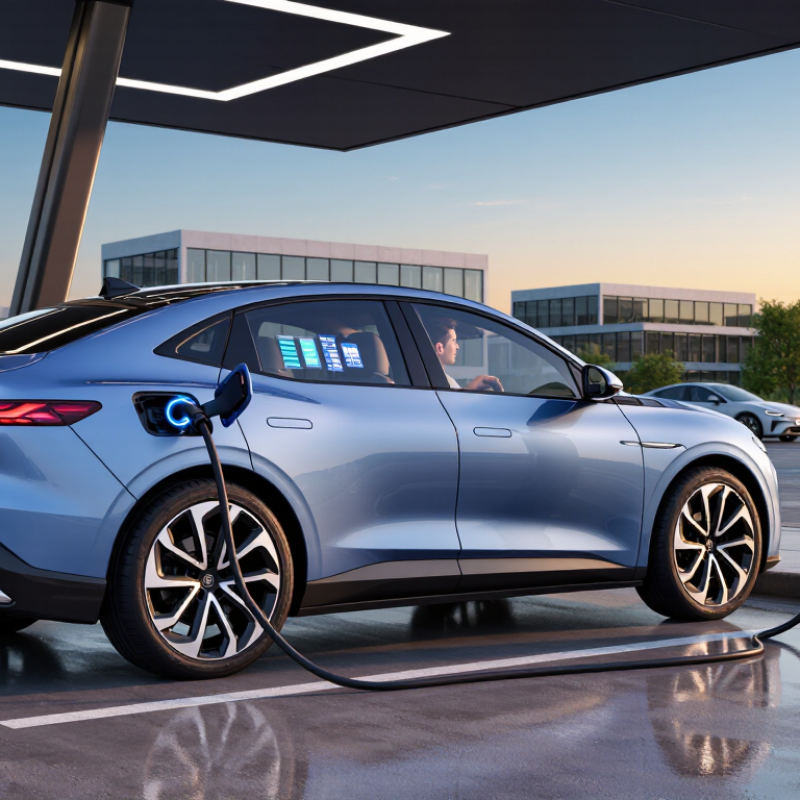
Why Is My DC Fast Charger Stopping at 80 Percent?

Why DC Fast Charging Tapers Near 80%: The Industry’s 10–80% Benchmark

A DC fast charger often appears to stop at 80 percent because charging speed changes sharply near that level. The industry’s 10–80% benchmark reflects this practical charging window. From a low state of charge, the battery can accept high power quickly. Near 80 percent, the battery management system reduces current to control heat, voltage, and cell stress.

This reduction is called charging taper. It may feel like a fault. Usually, it is not. The last 20 percent can take nearly as long as the first 60 percent. Battery temperature also matters. A cold pack may charge slowly at the start, while a hot pack may taper earlier. Air temperature, repeated fast-charging sessions, and the vehicle’s software can all affect the curve.

I have seen drivers blame the charger after waiting several minutes at 79 percent. That assumption is understandable, but incomplete. The charger and vehicle constantly negotiate power, and the vehicle normally makes the final decision. Some charging sessions may stop at exactly 80 percent because of a preset limit or site control. Not always.

If charging ends unexpectedly, check the vehicle’s charge limit, cable connection, and dashboard warning. Try another session after the battery reaches a moderate temperature. A sudden stop at different percentages deserves attention, especially when warnings appear. The 10–80% range is not a promise of identical speed; it is a useful benchmark for planning realistic charging time.

How the Battery Management System Uses Temperature and C-Rate Limits

A DC fast charger stopping near 80 percent is often following the battery management system’s safety map. The system monitors cell temperature, voltage, state of charge, and charging current every second. It then adjusts the allowed C-rate, which compares charging power with battery capacity. A 1C rate for a 75 kWh battery equals roughly 75 kW.

Cold cells may accept energy slowly because lithium plating can damage the anode. Hot cells also face tighter limits because heat accelerates degradation. The U.S. Department of Energy identifies temperature control as a central requirement for lithium-ion battery durability. Its Battery Technology Status and Projections report also shows why higher energy density increases thermal-management demands. That relationship is easy to underestimate.

At lower charge levels, the pack can often accept a higher C-rate. Near 80 percent, rising cell voltage forces the BMS to reduce current. This creates the familiar charging taper. The International Energy Agency reported more than four million public charging points worldwide at the end of 2023, yet charging performance still varies with temperature, pack design, and site power. A charger may display a high rating, but the battery decides what it can safely receive.

A warm battery helps.

A very hot battery does not.

Drivers sometimes blame the charger too quickly. I have made that assumption myself. In practice, a cold-soaked pack, repeated fast charging, or one warmer cell can trigger an earlier limit. The displayed 80 percent may also be a conservative operating target, not a fault.

Why Is My DC Fast Charger Stopping at 80%?

Representative battery-management limits showing how charging power is reduced as state of charge rises and cell temperature moves outside the preferred range.

Fast charging is commonly strongest between roughly 20% and 70% state of charge. Near 80%, cell voltage rises and the BMS may reduce current to control heat, lithium plating risk, and voltage limits. Cold batteries are limited more aggressively, while a warm battery can also receive a lower C-rate to prevent overheating. Actual thresholds vary by battery chemistry, pack design, temperature, and charger capability.

Why 50–350 kW Charger Ratings Do Not Equal Constant Charging Power

A 50–350 kW charger rating describes its maximum possible output, not constant charging power. Your vehicle still controls the session through battery voltage, temperature, and state of charge. A 350 kW unit may deliver 180 kW if the car accepts no more. A 50 kW unit may provide nearly its full rating for longer. Short bursts matter.

Charging power often peaks at a low battery percentage. As the battery fills, the vehicle gradually reduces current to control heat and protect cell health. This taper can begin near 50–70 percent, then become more noticeable around 80 percent. A brief 250 kW reading does not mean the battery received 250 kW continuously. Power also falls when the battery is cold, very hot, or unable to complete preconditioning.

A charger can have its own limits, too. Shared cabinets, a busy site, cable temperature, and electrical supply restrictions may reduce available power. The vehicle’s software may also stop at 80 percent because that limit was selected for daily driving. Check the charging screen, not only the station label. It may show current power and estimated time remaining.

I used to treat the charger’s headline number as a promise. That assumption needs revisiting. In practice, charging from 10 to 60 percent can be faster than waiting from 80 to 100 percent. The final minutes often feel disproportionately slow, even when the equipment is working normally.

How to Diagnose an 80% Stop: Vehicle, Connector, Station, and Grid

Why Is My DC Fast Charger Stopping at 80 Percent?

An 80 percent stop is often normal, not a failure. Battery management systems reduce charging power near high state of charge to control heat and cell stress. The IEA’s Global EV Outlook 2024 reports that public charging points grew by about 40 percent in 2023. More stations do not guarantee identical charging behavior. Vehicle software, battery temperature, and the displayed state of charge can all change the result. A cold battery may accept less power, even when the screen shows 80 percent. I once blamed the station too quickly; the vehicle had simply entered its charging taper.

Check the connector next. Dust, moisture, or a partly locked plug can interrupt communication. A loose connection may trigger an immediate stop. Station faults are also possible, especially when several dispensers share limited power. The U.S. Department of Energy’s Alternative Fuels Data Center notes that DC fast charging commonly slows substantially after 80 percent. Grid conditions can add another layer. Demand management may temporarily reduce output during busy periods. Look for fault messages, compare another connector, and record the time, battery temperature, and starting charge level. One test is not enough.

Tips: Arrive below 60 percent when practical. Confirm the plug is fully seated. Keep the vehicle’s charging software current. If charging repeatedly stops at the same percentage, ask qualified service personnel to review diagnostic logs. Do not assume every 80 percent stop has one cause.

When an 80% Limit Is Normal and When Service Is Required

Why Is My DC Fast Charger Stopping at 80 Percent?

An 80% stop is often normal, not a charger failure. Most electric vehicles reduce charging power near this level to control heat and protect battery cells. The charging curve may drop sharply, like water leaving a hose through a narrowing nozzle. The U.S. Department of Energy’s Alternative Fuels Data Center states that DC fast charging commonly takes 20 minutes to one hour, depending on battery size, temperature, and charging power. That range is wider than many drivers expect.

Check the vehicle’s charge limit first. A scheduled setting may be quietly stopping the session. Cold batteries, high battery temperature, heavy charger use, or limited site power can also reduce speed. The IEA’s Global EV Outlook 2024 reports more than four million public charging points worldwide at the end of 2023, but access does not guarantee full charging power. Infrastructure conditions vary.

Service is more likely needed when charging stops well below 80% without a clear warning. Repeated stops at 45% or 60% deserve attention. Watch for error messages, abnormal cable heat, sudden power loss, or a battery percentage that jumps unexpectedly. Try another approved charger and record the battery temperature, starting percentage, and exact stop point. That evidence helps technicians. A single failed session proves little. Several identical failures matter. My practical caution is simple: do not assume every 80% stop is harmless, especially if the pattern changes suddenly.

FAQS

Why does fast charging often slow near 80 percent?

Cell voltage rises as the battery fills. The battery management system then reduces current for safety. This is normal charging taper.

Does a 350 kW charger always provide 350 kW?

No. The vehicle decides how much power the battery can accept. A 350 kW charger may deliver only 180 kW.

What does a 1C charging rate mean?

A 1C rate roughly matches the battery’s capacity in kilowatts. For a 75 kWh battery, 1C equals about 75 kW.

How does cold weather affect charging?

Cold cells accept energy more slowly. Very cold conditions may increase the risk of lithium plating and trigger stricter limits.

Can a hot battery charge quickly?

A warm battery can help charging. An extremely hot battery cannot safely accept the same current.

Why might charging stop near 80 percent?

The limit may protect battery health or support daily driving. It does not automatically indicate a charger fault.

What can reduce charging power at a busy site?

Shared power cabinets, hot cables, and limited electrical supply can reduce output. The vehicle may also limit power.

Why is charging from 10 to 60 percent often faster?

Lower charge levels usually allow higher current. Charging slows near full capacity, especially after 80 percent.

Should I blame the charger when power drops early?

Not immediately. A cold battery, repeated fast charging, or one warmer cell may activate an earlier limit. I once assumed otherwise.

Conclusion

If you are wondering, “why is my dc fast charger stopping at 80 percent,” the behavior is often normal rather than a sign of failure. DC fast charging usually slows significantly as the battery approaches a high state of charge, which is why the 10–80% range is commonly used as a practical benchmark. The battery management system reduces charging power based on battery temperature, voltage, and C-rate limits to protect battery health and maintain safe operating conditions. As a result, a charger rated from 50 to 350 kW does not deliver its maximum output continuously; power typically tapers as the battery fills.

An 80% stop can also be caused by vehicle settings, a loose or overheated connector, station software, limited grid capacity, or a temporary equipment issue. Check the vehicle’s charge limit, inspect the connection, try another station, and compare results under different temperatures. If charging repeatedly stops well below the selected limit, produces warning messages, or occurs across multiple stations, professional service may be necessary.

Madeline

Madeline

Madeline is a dedicated marketing professional with a wealth of expertise in our company's core offerings. With a keen understanding of the industry, she brings a unique perspective to her role, consistently delivering high-quality content that highlights the superior aspects of our products. As......